Monday, November 11, 2013

SS Ayrfield, Sydney's floating forest


Homebush Bay, west of Sydney, Australia, is home to a few decommissioned ships as the area was once used as a ship-breaking yard. The most famous and unique among them though is SS Ayrfield. 


Originally launched as SS Corrimal, it was built in the UK in 1911 and commissioned in Sydney in 1912. She was purchased by the Commonwealth Government and used to transport supplies to American troops stationed in the Pacific region during World War II. After the war, it was sold to Miller Steamship Company Ltd and renamed Ayrfield. For 20 years, SS Ayrfield operated as a collier between Newcastle and Miller’s terminal in Blackwattle Bay. 

In 1972 SS Ayrfield was sent to Homebush Bay for breaking up, where its hall still remains floating, covered by lush vegetation. 


SEE ALSO: More abandoned ships // More abandoned places in Australia // LIST OF ALL DESERTED PLACES 
For more deserted places, LIKE US on Facebook and FOLLOW US on twitter


(Click here for the full post)


Monday, November 4, 2013

Kolmanskop, the ghost town of the desert


In the Namib desert, a few kilometers away from the Namibian port town of Lüderitz, there's the ghost town of Kolmanskop. Built by Germans in the beginning of the 20th century, Kolmanskop used to house approximately 1,000 diamond miners and their families. As it usually happens though, the town was left abandoned once the diamond field was exhausted. 

The story began in 1908 when German Zacharias Lewala found a diamond while working in the area and showed to his supervisor, the German railway inspector August Stauch. After realizing that this area was rich in diamonds, lots of German miners settled in this area and soon after the German government declared a large area as a "Sperrgebiet", starting to exploit the diamond field.

The town had a hospital, ballroom, power station, school, swimming pool, casino, and even a bowling It had the first x-ray-station in the southern hemisphere, as well as the first tram in Africa. A railway link connected the town to the port of Lüderitz. 

The decline began after the World War II when the diamond-field slowly exhausted, and the town was ultimately abandoned in 1954. In the following decades, the desert covered the streets and the tourists now walk through houses knee-deep in sand.


SEE ALSO: More abandoned ghost towns around the world // More abandoned places in the desert  // LIST OF ALL DESERTED PLACES 
For more deserted places, LIKE US on Facebook and FOLLOW US on twitter


(Click here for the full post)


Friday, October 25, 2013

An abandoned railway in the middle of Paris

Before the Paris Métro, there was the 'Chemin de fer de Petite Ceinture' or "little belt railway". Its steam engined trains run around the French capital, on tracks built between the city's forts, encircling 19th century Paris.

The railway fell into decline from the 1930's  and by 1985 all parts of the 30km (19 miles) line were shut down. The ancient walls through which the trains were running kept the Petite Ceinture isolated and allowed nature to reclaim the space. Recently, a small part of the railway opened as a park, with Parisians debating the fate of the rest of the line.


SEE ALSO: More abandoned railways and train stations // More abandoned places in France // LIST OF ALL DESERTED PLACES 
For more deserted places, LIKE US on Facebook and FOLLOW US on twitter


(Click here for the full post)


Friday, October 18, 2013

Hafodunos Hall, an abandoned mansion in Wales


Hafodunos Hall is a house located near the village of Llangernyw in north Wales. It was designed by Sir George Gilbert Scott, a prominent Gothic Revival architect and built between 1861 and 1866 for Henry Robertson Sandbach, whose family had bought the estate in 1830. The new house was built to replace a much older hall which had been built in 1674. The site had been occupied since at least 1530 but the remains of both previous houses are untraceable.

The Sandbach family sold Hafodunos in the early 1930s. The building has had different uses since, from being a private girls' school to an old people's home. The nursing home shut down in 1993 as it failed to meet quality standards. In 2004 the largest part of the house was destroyed by a devastating fire, and following that, the whole site was left abandoned. In 2010 the property was bought for £390,000 and the new owners announced their desire to restore the house and use it as a residence.


SEE ALSO: More abandoned houses around the world // More abandoned places in the United Kingdom // LIST OF ALL DESERTED PLACES 
For more deserted places, LIKE US on Facebook and FOLLOW US on twitter


(Click here for the full post)


Friday, October 11, 2013

Craco, a medieval Italian ghost town


First inhabited by Greeks during the 6th century AD, Craco was built 40 km (25 miles) inland and on a very steep summit for defensive reasons. During the following centuries, the town went under feudal control. A university was established in 1276 and by 1561 it had reached a population of 2,590 people.

By 1799, the townspeople overthrew the feudal system and Craco became an independent municipality and later, part of the Kingdom of Italy.

Soon though, the town started facing geological problems. By the beginning of the 20th century, hundreds of inhabidants had emigrated to north America due to poor agricultural conditions. A series of earthquakes and landslides followed in the next decades and in 1963 the entire population of 1,800 residents moved to Craco Peschiera for safety reasons. 

Today, the ghost town of Craco is visited by many tourists as well as many old residents who return back to the their hometown for annual religious festivals. The image of Craco has been used over the years in various films as a background setting; Quantum of Solace and The Passion of the Christ, being two of them. 


For more deserted places, LIKE US on Facebook and FOLLOW US on twitter


(Click her for the full post)


Monday, October 7, 2013

Inside the Fukushima evacuation zone


Two and a half years after the devastating Japan earthquake and tsunami, as well as the nuclear disaster that followed, killing 19,000 people and displacing more than 300,000, Reuters photographer Damir Sagolj returned to the region to document the lives of those affected by the tragedy. Even today, tens of thousands of survivors live in temporary housing as the area surrounding the nuclear plant remains too contaminated by radiation for residents to return for more than short visits. 


SEE ALSO: This photographer went inside Fukushima's nuclear disaster exclusion zone // The abandoned towns of Fukushima // More abandoned ghost towns around the world // More abandoned places in Japan // LIST OF ALL DESERTED PLACES 
For more deserted places, LIKE US on Facebook and FOLLOW US on twitter


(Click here for the full post)


A sign reading "Nuclear Power - The Energy for a Better Future", at the entrance of the evacuated town of Futuba, Fukushima

A vending machine carried in a field by the tsunami, near Minamisoma, Fukushima, inside the exclusion zone


A small monument for the victims in the evacuated town of Namie, Fukushima

Inside a restaurant in the evacuated town of Namie, Fukushima


Inside an abandoned house in the evacuated town of Namie, Fukushima


Wednesday, October 2, 2013

Mexico's abandoned 'Monumento de Mestizaje'


Monumento de Mestizaje was supposed to be a mega monument celebrating the Mestizo culture, built on a small island close to the shore, in the city of Chetumal, Mexico. Chetumal's former governor Joaquin Hendricks Diaz envisioned a massive iron construction, on the scale of Eiffel Tower and millions of pesos were invested. A 60 meter (200 feet) high arch was built but the construction was never finished. 

Today, the  monument remains unfinished and abandoned on its small island, often visited by tresspassers.  


SEE ALSO: More abandoned monuments around the world // More abandoned places in Mexico // LIST OF ALL DESERTED PLACES 
For more deserted places, LIKE US on Facebook and FOLLOW US on twitter


(Click here for the full post)


Monday, September 23, 2013

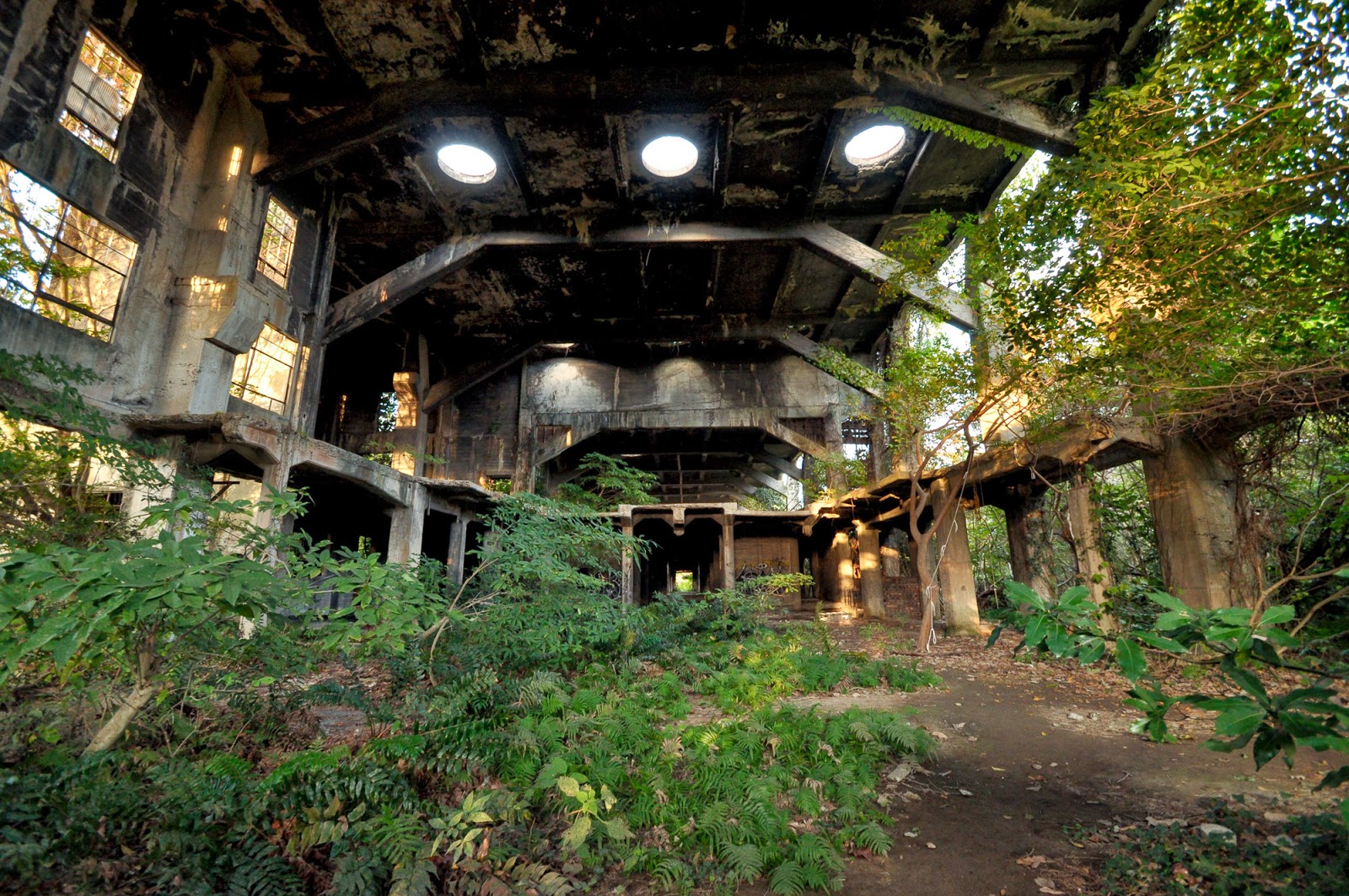
The abandoned Imari Kawanami shipyard

The Imari Kawanami shipyard on the island of Kyushu was one of the most famous abandoned places (or haikyo as they're called) in Japan. It was where, among others, the human torpedoes were produced during World War II. 

The building was constructed in 1851 as a glass factory but it was later turned into a shipyard. During World War II, they shipyard was also used as a munitions factory. At its highest point, it housed over 2500 workers, including schoolgirls and Korean nationals. 

After the war, the factory continued building and repairing ships but finally closed down in 1953. The shipyard was demolished in November of 2011 by the city of Imari in order to be turned into a public part. 


Friday, September 13, 2013

An abandoned pulp and paper plant in Kaliningrad

This abandoned pulp and paper plant in Kaliningrad was constructed by the Germans back when the town was known as Königsberg. The buildings survived World War II but it the plant shut down at the beginning of the 21st century. As the photos show, the abandoned site is often visited by graffiti artists. All photos were taken by urban explorer Lana Sator. 


SEE ALSO: More abandoned industrial sites around the world // More abandoned places in Russia // LIST OF ALL DESERTED PLACES 
For more deserted places, LIKE US on Facebook and FOLLOW US on twitter


(Click here for the full post)


Wednesday, September 4, 2013

The abandoned Riverside Hospital in New York's North Brother Island


The North Brother Island is a small island in the East River of New York City, just a short distance from the Bronx. It is now an uninhabited bird sanctuary but between 1885 and the late 1930's it was were patients of the Riverside Hospital were kept in isolation.

The Riverside Hospital, built first as a smallpox hospital but later expanded to other quarantinable diseases, moved to the North Brother Island in 1885. Among its most famous patients was "Typhoid Mary", the first person in the United States who carried and transmitted typhoid fever. She lived in the island for more than two decades until she died in 1938. The hospital closed down shortly thereafter. 

Today the island is abandoned and off-limits to the public. The buildings of the Riverside Hospital have been taken over by vegetation and are in danger of collapse.