Showing posts with label Japan. Show all posts

Monday, December 4, 2017

Koga Family Land: An abandoned amusement park in Japan

Koga Family Land was a small amusement park on the Shiga perfecture of Japan. Built on the shores of Biwa lake, the park shut down sometime in the 90s and was left to decay for the next 20 years.

What was left from the amusement park, including a restaurant and a cart ride, was finally torn down in 2008. The only thing standing today is its enormous ferris wheel.


SEE ALSO: More abandoned amusement parks and abandoned theme parks around the world // More abandoned places in Japan // LIST OF ALL DESERTED PLACES
For more deserted places, LIKE US on Facebook and FOLLOW US on twitter


(Click here for the full post)


Monday, November 20, 2017

The abandoned 'Western Village' theme park in Japan


Western Village or Western Mura (ウェスタン村) was an American west themed amusement park which opened in the early 1970's at Nikko, in Japan's Tochigi prefecture, a couple of hours away from Tokyo. 

Its first name was Kinugawa Family Ranch and it was run as a family business. At first it was basically an American west style ranch with a few horses and a fishing pond. Over the years though, it kept expanding to include more buildings such as a sheriffs office, a barber shop, a bank, a hotel and many other buildings. 

In the late 1970's it was named 'Western Village' and it kept expanding. It now had ghost houses, amusement arcades, a restaurant and even a replica of Rushmore mountain was added during the 1990's. Staff would dress up as cowboys and put on shows for visitors.

Western World finally closed in 2006. For the next several years the park remained abandoned attracting mainly lovers of haikyo - the Japanese word for abandoned places.


Monday, July 17, 2017

The abandoned Hachijo Royal Hotel in Japan


Back in the early 1960's it wasn't possible for Japanese tourists to travel oversees, so the country's tourism industry tried to compensate by building equivalent resorts closer to home. The island of Hachijo-jima, part of the Izu islands in the Philippine sea, was chosen for its subtropical climate and it was promoted as the 'Hawaii of Japan'. With a distance of 287 kilometers (178 miles) south of Tokyo, it was possible to reach the island by ferry or by plane.

The island saw a lot of investments with many new hotels being built. The largest of them was lavish Hachijo Royal Hotel. Modeled on French Baroque architecture, its gardens contained plaster renditions of Greek statues and ornate water fountains. The hotel attracted clients from Japan's expanding middle class and was very successful.

In the following decades things changed as Japanese tourists could now visit other countries easier. The prospect on spending their holidays on the black volcanic sands of Hachijo-jima wasn't so appealing when instead they could visit Thailand, Guam or even Hawaii. The hotel changed names several times, with the last one being Hachijo Oriental Resort prior to its demise and eventual closure around 2006.

Since then, the tropical heat and saltwater has ensured a swift deterioration of the hotel, while thick vegetation has covered its exterior. Inside the hotel, everything appears to have been left behind, from furniture to computers and other equipment. However, it doesn't look like it's possible for it to open again anytime soon

Thursday, September 22, 2016

The abandoned Family School Fureai in Japan


The city of Yubari on Japan’s northernmost island of Hokkaido, is known as the "Detroit of Japan". Back in 1960 it was the "capital of coal" and had a population of 120,000. By 1990, when the last coal mine closed, the population had plummeted down to 20,000 people and when the city declared bankruptcy in 2007, less than 10,000 people still lived there. To make things worse, it's also the city with the oldest population in the country.

As coal miners and their families were fleeing Yubari during the last decades, they left behind a large number of abandoned buildings. Asahi Elementary School opened in 1975 to consolidate 3 other local schools (Teimi, Fukuzumi & Daini) that already experienced a sharp decline in the number of students. Then, 413 students were attending the school. By 1982, only 60 students were left.

It was then when it was decided to close the school and convert it into a public dormitory under the management a semi-public corporation – Yubari Kanko Kaihatsu. The building became known as Family School Fureai. In 2006 the company went bankrupt and the school closed forever.

Since then, Family School Fureai has been sitting abandoned. The building has been damaged due to water leaks while it has also been heavily vandalized. Wild animals and occasionally people can be found living inside.


SEE ALSO: More abandoned schools around the world // More abandoned places in Japan // LIST OF ALL DESERTED PLACES 
For more deserted places, LIKE US on Facebook and FOLLOW US on twitter


(Click here for the full post)


Monday, July 18, 2016

This photographer went inside Fukushima's nuclear disaster exclusion zone

Five years after the devastating 8.9 magnitude Japan earthquake and tsunami, as well as the nuclear disaster that followed, Malaysian photographer Keow Wee Loong sneaked inside the Fukushima exclusion zone with his friends to take photos of what's left behind.

Since April 22, 2011, an area within 20km (12.4miles) radius of Fukushima Daiichi Nuclear Power was quickly evacuated and cordoned of to public. Residents abandoned it quickly taking only necessary items and leaving behind clothes inside washing machines and supermarket shelves filled with goods, even luxury items.

Even though the photographer was wearing a gas mask to protect himself from the contaminated air, he said he could still feel his eyes burning. He had only a few hours to spend inside the red zone, which he entered at 1am to avoid the police. 


For more deserted places, LIKE US on Facebook and FOLLOW US on twitter


Monday, December 1, 2014

Expoland, an abandoned amusement park in Japan

Expoland amusement park in Osaka, Japan, opened as the amusement zone of Expo '70, the International Exposition hosted in the city in 1970. It was supposed to be a temporary part and closed down after the end of the exposition but reopened in 1972 due to its popularity. The park covered an area of 20 hectares and included more than 40 rides and attractions, 19 restaurants and shops.

In May 5, 2007, a tragic accident took place at Expoland. Fujin Raijin II rollercoaster derailed resulting to the death of a 19-year-old university student while forty people were injured and thirty-one were taken to the hospital. The investigation revealed that the ride derailed due to a broken axle. None of the ride vehicle's axles had been replaced for fifteen years.

The park reopened after a series of safety inspections but closed again on December 9, 2007 due to lack of customers. In 2008 there were reports that Paramount Pictures is looking to turn the Expoland site into a theme park. In 2009, 20% of the park's area was renovated and reopened as a new theme park called 'Farm Expo'.


SEE ALSO: More abandoned amusement parks and abandoned theme parks around the world // More abandoned places in Japan // LIST OF ALL DESERTED PLACES 
For more deserted places, LIKE US on Facebook and FOLLOW US on twitter


(Click here for the full post)


Monday, September 1, 2014

Nara Dreamland, an abandoned theme park in Japan


Nara Dreamland theme park was built in 1961 near the city of Nara, Japan. The creators of the park were inspired by Disneyland in California and tried to replicate the same feel, copying some of the main landmarks including the Train depot, a Main Street, U.S.A. and the familiar Sleeping Beauty Castle. The park had its own mascots, which were 2 kids dressed as bear skinned guards, named Ran-chan and Dori-chan.

Nara Dreamland closed permanently on August 31, 2006 due to low visitor numbers. Everything inside the park, including the rides and reastaurants, was left induct and is still standing today. This gives the impression of an eerie ghost town, attracting many urban explorers.


SEE ALSO: More abandoned amusement parks and abandoned theme parks around the world // More abandoned places in Japan // LIST OF ALL DESERTED PLACES 
For more deserted places, LIKE US on Facebook and FOLLOW US on twitter


(Click here for the full post)


Monday, October 7, 2013

Inside the Fukushima evacuation zone


Two and a half years after the devastating Japan earthquake and tsunami, as well as the nuclear disaster that followed, killing 19,000 people and displacing more than 300,000, Reuters photographer Damir Sagolj returned to the region to document the lives of those affected by the tragedy. Even today, tens of thousands of survivors live in temporary housing as the area surrounding the nuclear plant remains too contaminated by radiation for residents to return for more than short visits. 


SEE ALSO: This photographer went inside Fukushima's nuclear disaster exclusion zone // The abandoned towns of Fukushima // More abandoned ghost towns around the world // More abandoned places in Japan // LIST OF ALL DESERTED PLACES 
For more deserted places, LIKE US on Facebook and FOLLOW US on twitter


(Click here for the full post)


A sign reading "Nuclear Power - The Energy for a Better Future", at the entrance of the evacuated town of Futuba, Fukushima

A vending machine carried in a field by the tsunami, near Minamisoma, Fukushima, inside the exclusion zone


A small monument for the victims in the evacuated town of Namie, Fukushima

Inside a restaurant in the evacuated town of Namie, Fukushima


Inside an abandoned house in the evacuated town of Namie, Fukushima


Monday, September 23, 2013

The abandoned Imari Kawanami shipyard

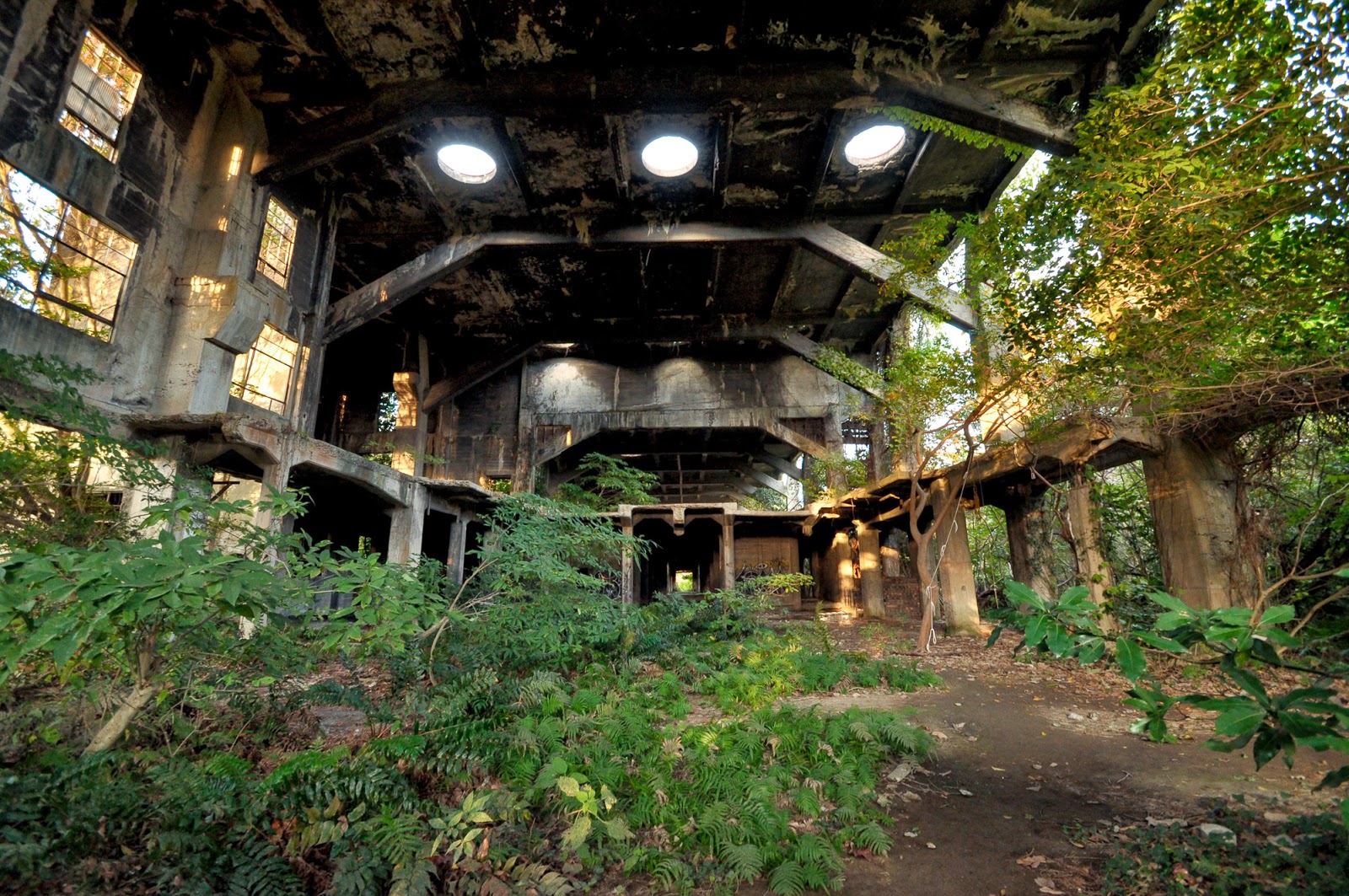
The Imari Kawanami shipyard on the island of Kyushu was one of the most famous abandoned places (or haikyo as they're called) in Japan. It was where, among others, the human torpedoes were produced during World War II. 

The building was constructed in 1851 as a glass factory but it was later turned into a shipyard. During World War II, they shipyard was also used as a munitions factory. At its highest point, it housed over 2500 workers, including schoolgirls and Korean nationals. 

After the war, the factory continued building and repairing ships but finally closed down in 1953. The shipyard was demolished in November of 2011 by the city of Imari in order to be turned into a public part. 


Monday, March 11, 2013

The abandoned towns of Fukushima


Two years after the devastating Japan earthquake and tsunami that left nearly 19,000 people dead or missing and displaced more than 300,000, the surrounding towns of Fukushima Daichi nuclear plant remain abandoned. Even today, tens of thousands of survivors live in temporary housing as the area surrounding the nuclear plant remains too contaminated by radiation for residents to return for more than short visits.


SEE ALSO: This photographer went inside Fukushima's nuclear disaster exclusion zone // Inside the Fukushima evacuation zone // More abandoned ghost towns around the world // More abandoned places in Japan // LIST OF ALL DESERTED PLACES 
For more deserted places, LIKE US on Facebook and FOLLOW US on twitter


A deserted street in the town of Namie
A street light at the abandoned town of Iitate, outside the nuclear exlusion zone
Drinks and rice vending machines in the abandoned town of Naraha, inside the exclusion zone


The destroyed Tomioka station in the town of Tomioka


A tennis court in the abandoned town of Iitate